dingli@dlbio-dryer.com
+86 157-1520-0291(Wechat/WhatsApp)
dingli@dlbio-dryer.com
+86 157-1520-0291(Wechat/WhatsApp)

1. Adjust the temperature. Increasing the hot air temperature can accelerate the drying rate of the bagasse. However, excessively high temperatures may cause the surface of the bagasse to scorch or become over-dried. Therefore, properly controlling the inlet air temperature to achieve optimal drying results is crucial.
2. Control bagasse moisture and feed rate. High feed moisture or an excessive feed rate can prolong the drying time. Consequently, it is necessary to control the moisture content of the feed and the amount of material loaded per batch to avoid overloading, thereby ensuring a balance between drying efficiency and time.

3. Optimize rotation speed and drum structure. The rotation speed of the dryer drum and its internal structure (such as spiral blades and drum inclination) significantly affect the mixing and heating of the bagasse. Adjusting the rotation speed and structural design can increase the residence time of the bagasse and ensure more thorough contact with the hot airflow, thereby shortening the drying time.
4. Regulate airflow volume and velocity. Properly adjusting the inlet airflow volume and velocity ensures that the bagasse makes full contact with the hot air inside the drum. Insufficient airflow may result in low drying efficiency, while excessive airflow increases energy consumption.


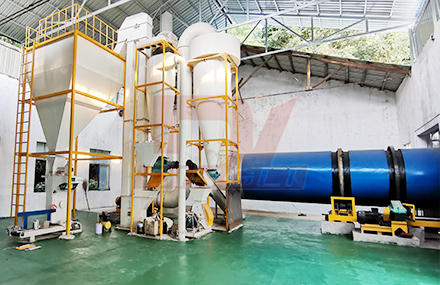
【Location】: Chongqing
【Capacity】: 1.5tph

【Location】: Burundi
【Capacity】: 1t/h

【Location】: Kenya
【Capacity】: 20tph