dingli@dlbio-dryer.com
+86 157-1520-0291(Wechat/WhatsApp)
dingli@dlbio-dryer.com
+86 157-1520-0291(Wechat/WhatsApp)

Coconut flakes and coconut coir, as important agricultural by-products, are increasingly widely used in horticultural substrates, biomass fuels, and environmental protection materials. Drying, as the core step in coconut flake and coconut coir processing, directly determines the quality of the finished product and production safety. Mastering the following three key temperature control points is crucial for ensuring stable equipment operation and increasing product added value.
I. Choose Fuel According to Local Conditions
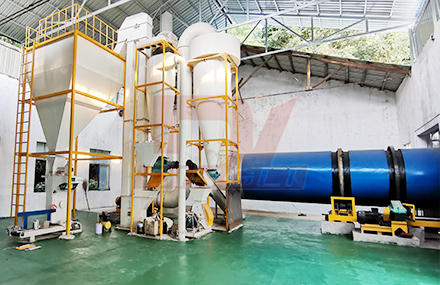
The working principle of a cocopeat dryer is to allow the material to fully contact with high-temperature hot air through heat transfer, thereby significantly reducing the moisture content of the material. Fuel selection is the starting point for temperature control. The stability of fuel quality directly affects the fluctuation range of hot air temperature; poor control at the source will lead to a significant increase in the difficulty of subsequent temperature control.

II. Strengthen Process Monitoring and Recording
Temperature control cannot rely solely on experience; it requires data support. The dryer should be equipped with a temperature control device to monitor the temperature changes inside the drum in real time and record the temperature data during equipment operation, ensuring the dryer is always in optimal operating condition.
III. Comprehensive Control of Equipment Parameters
Airflow and direction are also important means of controlling temperature changes. By adjusting the fan and dampers, the contact efficiency between hot air and materials can be changed, effectively regulating the temperature.