dingli@dlbio-dryer.com
+86 157-1520-0291(Wechat/WhatsApp)
dingli@dlbio-dryer.com
+86 157-1520-0291(Wechat/WhatsApp)

Zhengzhou Dingli New Energy Technology Co., Ltd. successfully participated in Mining Indonesia 2026, held from September 9 to 12 in Jakarta, Indonesia. As one of Southeast Asia's important mining industry exhibitions, the event provided an excellent platform for Dingli to showcase its industrial drying technology and connect with customers and industry partners from Indonesia and other countries.
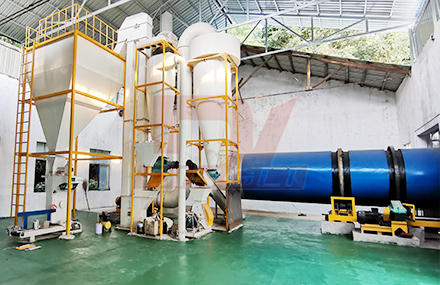
During the exhibition, Dingli presented its advanced **industrial drying equipment and drying solutions**, including rotary dryers, coal drying equipment, mineral drying systems, biomass dryers and complete drying production lines. The displayed solutions attracted considerable attention from visitors looking for efficient and reliable drying technology for various industrial materials.
Dingli's technical team had in-depth discussions with customers about their specific drying requirements, including material characteristics, moisture content, processing capacity, final moisture requirements, heat sources and equipment configuration. Based on different production conditions, Dingli provided professional equipment selection advice and customized drying solutions.
Extensive Experience in the Indonesian Market
Indonesia is rich in coal, minerals, biomass and agricultural resources, creating strong demand for efficient industrial drying technology. Dingli has been actively developing the Indonesian market and has accumulated valuable project experience in the region.
Dingli's drying solutions have been applied to various materials, including coconut coir, coconut shells, wood chips, cassava residue and coal. These successful projects have provided Dingli with a deeper understanding of local customer requirements and strengthened its ability to provide customized drying solutions for the Indonesian market.

Expanding Global Cooperation
The successful participation in Mining Indonesia 2026 further increased Dingli's visibility among international customers and created new opportunities for cooperation in Southeast Asia.
As an experienced industrial drying equipment manufacturer, Dingli provides not only individual drying machines but also complete solutions covering process design, equipment selection, heat source configuration, production line design, installation and commissioning.
In the future, Dingli will continue to expand its international market presence, improve its drying technology and provide more efficient, energy-saving and reliable industrial drying solutions for customers worldwide.
Dingli looks forward to working with more customers and partners in Indonesia and across the global market.


【Location】: TangShan
【Capacity】: 93T/H

【Location】: South African
【Capacity】: 35tph

【Location】: Ningxia
【Capacity】: 1000t/d