dingli@dlbio-dryer.com
+86 157-1520-0291(Wechat/WhatsApp)

Cassava pulp is a by-product generated during cassava starch processing. It contains a considerable amount of moisture and fibrous material, making it difficult to store, transport, and utilize directly in many industrial applications.
For cassava processing plants looking to convert wet cassava pulp into a more valuable product, an efficient drying system is essential. However, directly feeding high-moisture cassava pulp into a thermal dryer may increase energy consumption and drying costs.
A practical solution is to combine mechanical dewatering with industrial rotary drying technology. This approach helps remove excess water before thermal drying and improves the overall efficiency of the drying process.
1. Why Does Cassava Pulp Need Mechanical Dewatering?
Fresh cassava pulp usually contains a large amount of water after starch extraction. Its actual moisture content varies depending on the cassava processing method and production conditions.
High moisture creates several challenges:
- High drying energy demand:** More water must be evaporated during thermal drying.
- Difficult material handling:** Wet cassava pulp may be sticky and prone to agglomeration.
- Storage difficulties:** High moisture can increase the risk of spoilage during storage.
- Transportation costs:** Excess water increases the weight of the material being transported.
Therefore, removing part of the water before thermal drying can help reduce the workload of the dryer and improve production efficiency.
2. How Does Mechanical Dewatering Work?
Mechanical dewatering uses physical pressure or mechanical separation to remove free water from wet cassava pulp.
Depending on the material characteristics and production requirements, suitable equipment may include screw presses, filter presses, or other mechanical dewatering systems.
The general process includes:
Material Feeding: Wet cassava pulp is transported into the dewatering equipment.
Mechanical Compression: Pressure is applied to separate part of the free water from the fibrous material.
Water Discharge: The separated water is discharged through the equipment's drainage system.
Discharge of Dewatered Material:** The partially dewatered cassava pulp is conveyed to the subsequent drying stage.
Mechanical dewatering does not completely dry the material. It mainly removes free water, while the remaining moisture is reduced through thermal drying.
3. Why Combine Mechanical Dewatering with a Rotary Dryer?
Mechanical dewatering and thermal drying perform different functions. Combining them creates a more suitable processing solution for high-moisture cassava pulp.
A typical processing line consists of:
1. Wet cassava pulp feeding
2. Mechanical dewatering
3. Conveying and feeding system
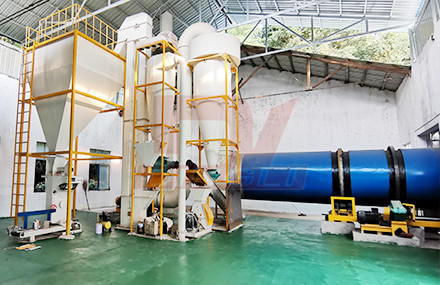
4. Rotary drum drying
5. Material discharge
6. Dust collection and exhaust gas treatment
After mechanical dewatering, the material enters the rotary dryer. Hot air transfers heat to the cassava pulp, allowing the remaining moisture to evaporate.
A rotary drum dryer is suitable for continuous industrial drying applications. Its rotating drum and specially designed internal lifting flights help lift, disperse, and mix the material during operation.
This improves contact between the wet material and hot air, supporting continuous moisture removal.
The specific equipment configuration should be determined according to the material properties, processing capacity, initial moisture content, and required final moisture content.
4. Advantages of an Industrial Cassava Pulp Rotary Dryer
For large-scale cassava processing plants, a properly configured rotary drying system offers several advantages.
Continuous Industrial Operation
The rotary dryer is designed for continuous material feeding and discharging, making it suitable for industrial production lines.
Improved Material Distribution
The internal lifting flights help distribute and turn the material inside the drum, improving heat exchange between the material and drying air.
Adaptable Drying Configuration
The drying temperature, drum structure, feeding system, and other operating parameters can be adjusted according to the characteristics of cassava pulp.
Integration with Pretreatment Equipment
The rotary dryer can be integrated with mechanical dewatering equipment, conveying systems, heat sources, and dust collection equipment to form a complete drying line.

5. What Should You Consider When Designing a Cassava Pulp Drying Plant?
Selecting the right drying equipment requires more than simply considering the required production capacity.
Several factors should be evaluated before determining the equipment configuration.
- Raw Material Moisture:** Determine the moisture content of cassava pulp before and after mechanical dewatering.
- Processing Capacity:** Calculate the required wet material input and dried product output.
- Final Moisture Requirement:** Define the moisture content required for subsequent storage, transportation, or processing.
- Heat Source:** Evaluate available energy sources, fuel costs, and local operating conditions.
- Material Characteristics:** Consider fiber content, particle size, stickiness, and feeding properties.
- Environmental Requirements:** Select suitable dust collection and exhaust gas treatment systems.
Providing accurate material information helps engineers design a more suitable drying solution.
6. Dingli Cassava Pulp Drying Solutions
Dingli specializes in industrial drying equipment and customized drying system solutions for various high-moisture materials.
For cassava pulp processing plants, Dingli can provide rotary drum drying equipment and corresponding system configurations based on the actual material characteristics and production requirements.
By combining suitable pretreatment equipment with an industrial rotary dryer, manufacturers can establish a continuous drying process to reduce moisture and prepare cassava pulp for further utilization.
Whether you are planning a new cassava pulp drying plant or upgrading an existing production line, selecting the right drying process is an important step toward improving production efficiency.
7. Get a Customized Cassava Pulp Drying Solution
Are you looking for an industrial cassava pulp dryer for your processing plant?
Contact Dingli and provide the following information:
- Raw material: Fresh cassava pulp or processed cassava residue
- Initial moisture content
- Required final moisture content
- Processing capacity (tons per hour)
- Available heat source
Our engineers can evaluate your material characteristics and recommend a suitable mechanical dewatering and rotary drying solution.
Contact Dingli today to discuss your cassava pulp drying project and get a customized equipment proposal.