dingli@dlbio-dryer.com
+86 157-1520-0291(Wechat/WhatsApp)
dingli@dlbio-dryer.com
+86 157-1520-0291(Wechat/WhatsApp)

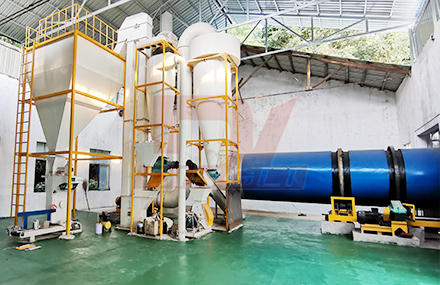
1. Structural differences: The single-drum dryer consists of a single horizontal rotating cylinder with internal lifting flights; as the drum rotates, the material is lifted to form a "material curtain" and exchanges heat through direct contact with the hot air. In contrast, the three-drum dryer comprises three concentrically nested cylinders (inner, middle, and outer); the material travels sequentially through the three layers in a back-and-forth path, while the hot air follows a flow path that alternates between counter-current and co-current modes, resulting in a material residence time that is two to three times longer than that of the single-drum dryer.
2. Thermal efficiency: This is a key differentiator that directly determines operating costs.
Heat exchange in the single-drum dryer occurs within a single cylinder, leading to significant heat loss through the outer shell. Additionally, high-moisture, sticky coal slime tends to adhere to the drum walls or lifting flights, creating "dead zones" for heat exchange; consequently, thermal efficiency is typically only 50%–60%, and processing coal slime with 25% moisture content requires a large amount of heat. The three-drum dryer features thermal insulation between its three layers, drastically reducing heat loss through the outer shell. Its serpentine flow design extends the contact time between material and hot air, while the structure of the lifting flights breaks up the material to prevent adhesion; this results in a thermal efficiency of 70%–80% and significantly improved heat utilization.

3. Energy consumption and footprint: The differences here are also quite apparent. When processing the same volume of coal slime, the three-drum dryer consumes 20%–30% less fuel than the single-drum model, offering a distinct advantage in long-term operating costs. To meet drying requirements, the single-drum dryer necessitates a longer cylinder, resulting in a footprint approximately 1.5 to 2 times larger than that of the three-drum dryer for the same production capacity; thus, the compact structure of the three-drum dryer is better suited for sites with limited space.
4. Material adaptability: Differences in the capability of each type to process high-moisture coal slime. Coal slime typically has a moisture content of 15%–30% (with flotation tailings often exceeding this range); its high adhesiveness places stringent demands on preventing material buildup on the dryer walls. Single-drum dryers require additional wall-cleaning mechanisms to handle such high-moisture material; without them, clogging is likely, and achieving a stable discharge moisture content below 10%—the standard requirement for co-firing in power plants—is difficult. In contrast, the multi-layer structure of the three-drum dryer minimizes adhesion through design optimization, allowing discharge moisture to be stably controlled between 8% and 12%; this meets downstream industrial requirements without the need for secondary processing, offering greater operational versatility.
5. Regarding operation and maintenance: The single-drum dryer features a simple structure with fewer potential points of failure, requiring attention only to wear parts like support rollers and seals, and entails a low operational learning curve. While the three-drum dryer has a more complex structure—requiring periodic inspection and replacement of internal lifting flights—its modular design simplifies maintenance; in the long run, the economic benefits derived from reduced energy consumption far outweigh maintenance costs, making it the more cost-effective choice.
Overall, the three-drum coal slime dryer is better suited for high-moisture, sticky coal slime, as well as scenarios prioritizing low energy consumption and compact footprints. The single-drum dryer is more appropriate for situations with limited budgets, ample space, and lower initial coal slime moisture content. Users should make their selection based on a comprehensive assessment of their production capacity, raw material characteristics, and site conditions.