dingli@dlbio-dryer.com
+86 157-1520-0291(Wechat/WhatsApp)
dingli@dlbio-dryer.com
+86 157-1520-0291(Wechat/WhatsApp)

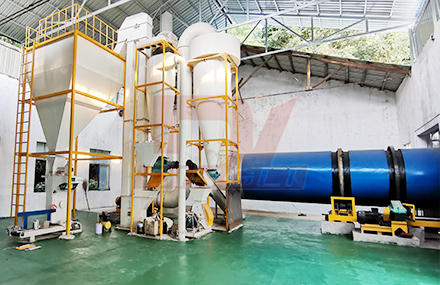
As a byproduct of coal washing and processing, coal slime is characterized by high moisture content, high viscosity, and low calorific value; effective drying is key to its resource utilization. Rotary coal slime dryers have become the mainstream equipment for this purpose due to their high processing capacity and stable operation. However, in actual production, the specific characteristics of the coal slime significantly impact drying efficiency.
1. Feed Moisture Content
The initial moisture content of the coal slime is the most direct factor affecting drying efficiency. Higher moisture content means a greater volume of water must be evaporated, requiring more heat and time. Generally, drying efficiency is optimal when the moisture content of coal slime discharged from filter presses is between 25% and 30%. When moisture exceeds 30%, the material's viscosity increases significantly, making it prone to adhering to the inner drum walls and lifting flights. This leads to the formation of "wet cores" that hinder full contact between the hot air and the material, resulting in a sharp decline in drying efficiency.

2. Coal Slime Viscosity
Coal slime viscosity varies with moisture content and particle fineness. Highly viscous coal slime tends to clump and stick to the drum walls during drying; this not only reduces heat exchange efficiency but can also cause material blockages severe enough to force a system shutdown for cleaning. To handle highly viscous coal slime, it is common practice to install a breaking device at the dryer inlet or use lifting flights with self-cleaning features to ensure the material remains loose within the drum.
3. Particle Size Distribution
The finer the coal slime particles, the larger the specific surface area; theoretically, this allows for better contact with hot air and faster drying. However, excessively fine particles are easily carried away by the airflow, placing a heavier burden on the dust removal system. Additionally, fine particles have a shorter residence time in the drum and may be discharged before fully drying, compromising the quality of the final product. A balanced particle size distribution helps achieve uniform drying.


【Location】: TangShan
【Capacity】: 93T/H

【Location】: Shanxi
【Capacity】: 50ph

【Location】: AnHui
【Capacity】: 70tph